TIP OF THE WEEK: November 3, 2016 – Steampunk Decor – Who Knew?

For previous TIP OF THE WEEK click here.

I have to admit, before I started painting furniture I had never heard of Steampunk or Steampunk Decor.

steam·punk
ˈstēmˌpəNGk/
noun
a genre of science fiction that typically features steam-powered machinery rather than advanced technology.

Steampunk incorporates technology and aesthetic designs inspired by 19th-century industrial steam-powered machinery. Steampunk decor will then have elements of machinery and the elegance of 19th century design.

I found this article does a great job of explaining Steampunk and Steampunk Decor.

http://www.impressiveinteriordesign.com/steampunk-interior-design-style-decorating-ideas/

Here’s what came up with a Google Search on Steampunk Decor.  Browse through some of these links to get an idea of the look.

https://www.google.com/webhp?sourceid=chrome-instant&ion=1&espv=2&ie=UTF-8#q=steampunk%20decor 

For previous TIP OF THE WEEK, click here.

Why am I so interested in learning more about this unusual interior design? I have a customer who really likes this and looks for pieces that will fit. So, I made it my business to find out…and you know what? It’s pretty fascinating stuff.

I’ve done a couple of pieces now for him. I call it a Steampunk type look. Not exactly the real deal, but reminiscent of true Steampunk.

The first piece was a marble top coffee table. The middle piece of marble was missing and had been replaced with glass. I painted the table black and bought a piece of fabric from Jo-Ann’s which featured some of the colors of Steampunk and included images of a map, post office stamps, etc. I covered a thin board and stapled it on the back. I put it under the glass (it fit fine as with the board and the glass, the width was just about the same as the original marble and ended up with a cool, Steampunk look coffee table.

steampunktablesteampunktable11

Then, this cool clock came to me through a friend and I thought it would really be a statement piece. I painted it black and an out of date nautical clock has now been elevated to a Steampunk look. My customer loved it and purchased it on the spot.
nautical-clock

I’m kind of liking this Steampunk Decor.

TIP OF THE WEEK: October 17, 2016 – Four Chairs and a Bench

Previous TIP OF THE WEEK

What a week we’ve had!  This week Danny and I worked with our friend, Michelle, to come up with a beautiful dining room set for a customer.  Michelle had the table and chairs but the customer also wanted a bench, preferably a church pew.  We had the task of staining and re-covering the chairs and finding a church pew or something like it.

chairsstainedforcustomerRepairing, staining, and covering the chairs – no problem.

chairsstainedforcustomer1

But, when it came to finding a small church pew, we were soon out of luck and time.  Danny had often talked about trying to turn chairs into a bench after we saw one, so we started thinking about finding some chairs and trying that. Michelle found us 4 chairs and we were off to Pinterest to learn how to make one.

We saw a  lot of chairs made into benches but many of them curved, due to the shape of the chairs.   And then we found what we were looking for! There were no detailed directions, just this simple paragraph and we had our “ah-ha” moment.  http://www.robomargo.com/bench.html 

KyLady wrote:  “We shortened the front piece on the middle chair and attached it to the corner of each of the outside chairs. If you do not shorten the front piece of the middle chair the bench would not have a straight front and back, it would curve since the fronts of chairs are wider than the backs. The only legs removed are the front ones on the middle chair, the other legs are the original chair legs. All you actually use on the middle chair is the entire back and the front piece.”

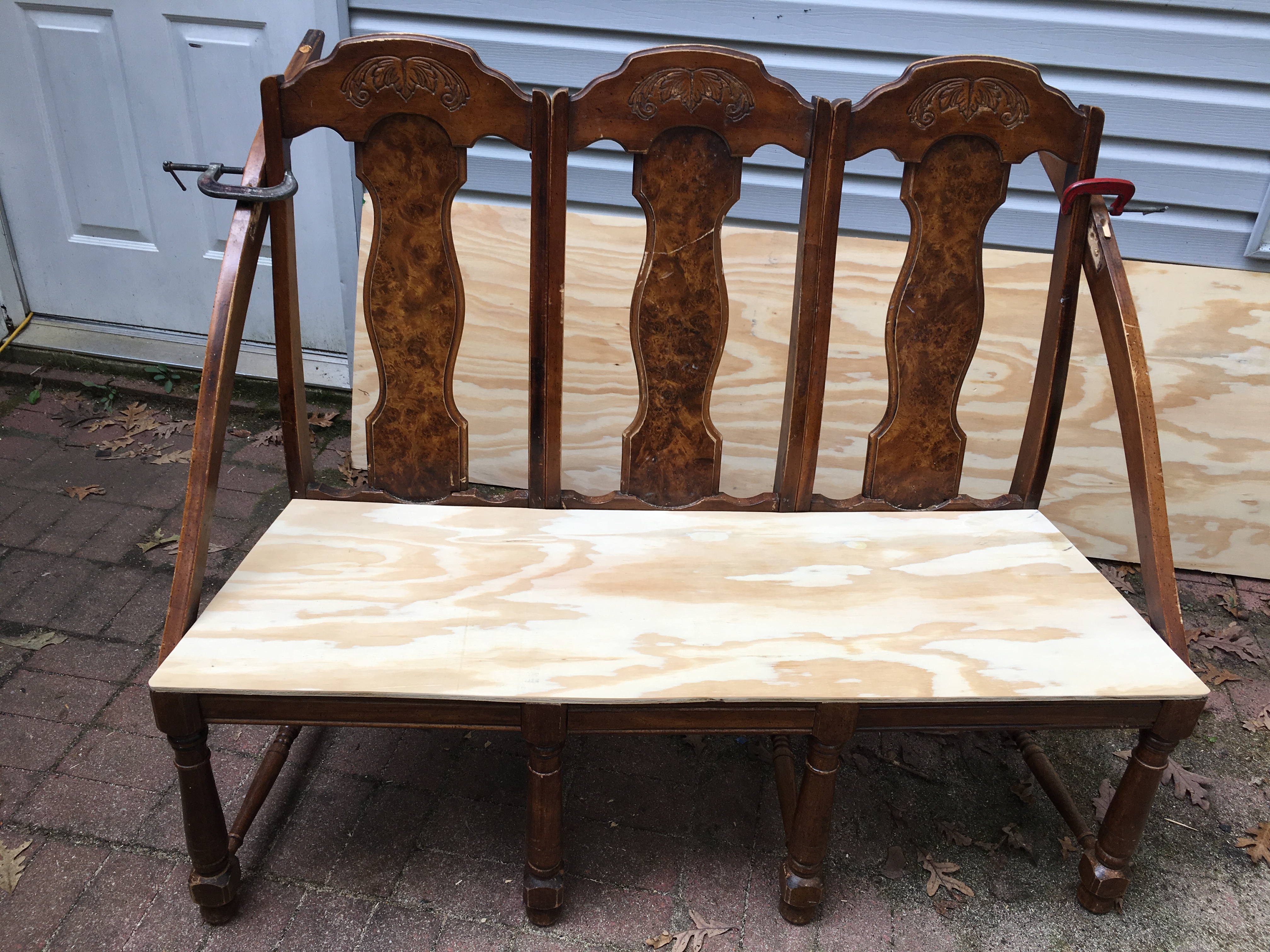
At first it didn’t sink in because we didn’t understand what she meant by shortening the front piece and attainspirationbenchching it to the corner of each of the outside chairs.  And then we got it.  Notice the middle chair has no front legs.  Removing them allowed the chairs to sit right next to each other.  This made the middle chair the same width in the front as in the back.  You can see in the photo it is narrower than the other two chairs. The front piece KYLady mentioned is that piece the arrow in the photo is pointing to.  That piece was saved and shortened and added back on so all 3 chairs would be the same in the front.  “Ah-ha”!

So now Danny was ready to start.  We only needed 3 of the chairs for the bench to get the size bench we wanted.  The fourth was still used, bench-3though. You will see how in the the photos below.

You can see the gap when the front legs were still on the middle chair in this photo.

In this photo, Danny has remobench-4ved the front legs of the chair and both the side and front pieces and has glued and clamped and screwed the middle chair to the other two.  He screwed them together right under the top edge and right under where the seat would go.  He shortened the saved front piece to fit the space in front, and then added dowels (and holes) to fit them together and glued it in place.

Rebench-6member that fourth chair? The back legs were broken on it anyway, so he used them to create beautiful curved sides for the bench. That was Michelle’s creative idea!  He cut them off even with the back of the chairs using a straight cut and then glued, clamped and screwed them on. He also cut a 1/2″ piece of plywood to fit, then sanded it for smoothness.

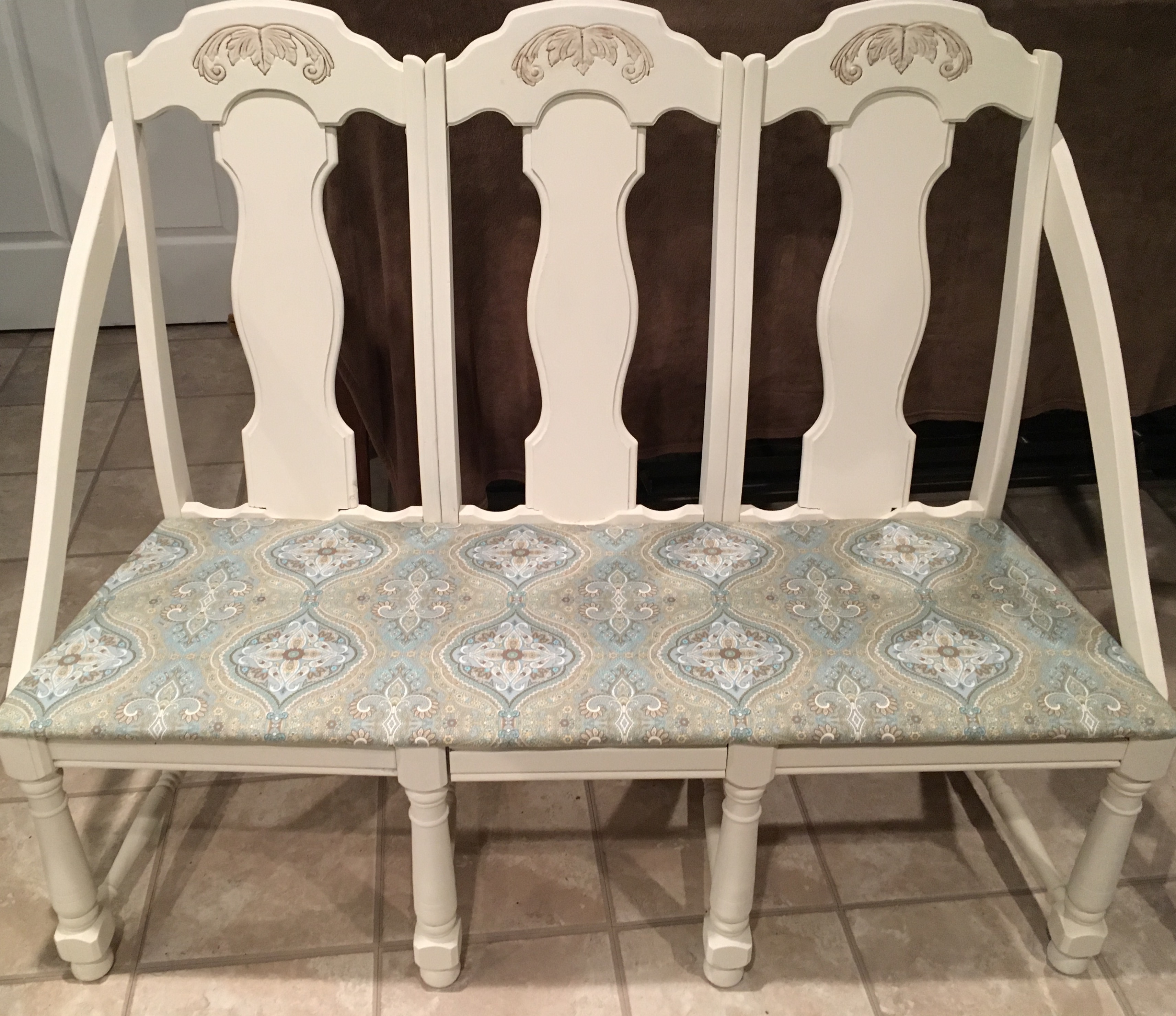
We were now ready to paint.  We used, of course, Missouri Limestone Company’s chalk-based paint in “Grannie’s Lace”, the brand we distribute and love to use!

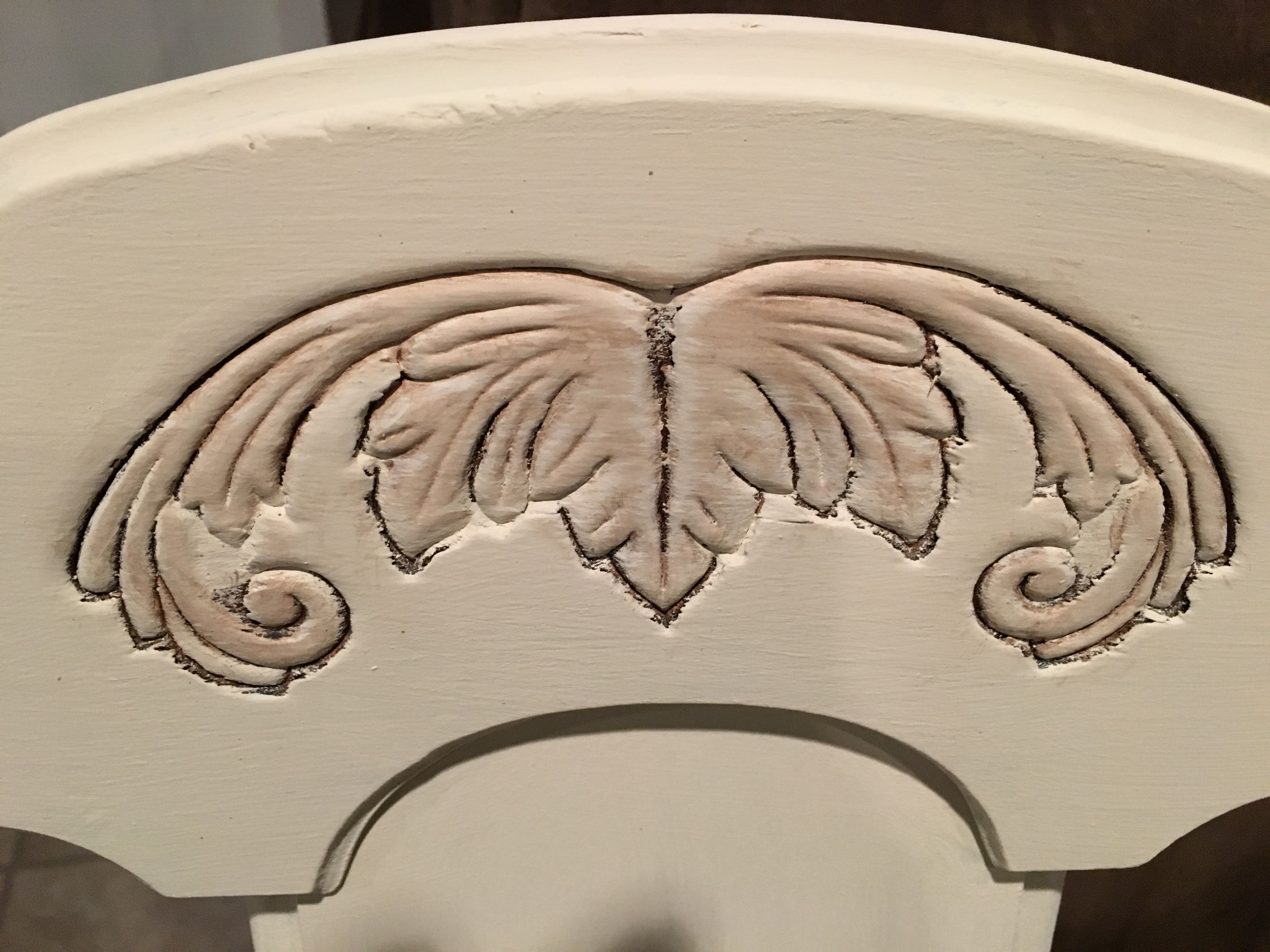
With a little dry brushing of some water-downed Varathane water-based stain and sealer, we highlighted the embossed design on the front of the bench.  We added some fiberfill batting to the board, covered it with fabric and screwed it in place underneath. We sealed it with poly and the result was a beautiful bench.

Danny did a great job creating this work of art, don’t you think? The customer was thrilled!  She said she liked it even better than the church pew she had been thinking of originally.

Danny’s ready to make more as soon as he finds more chairs!  Be sure to contact us:  sharsumpaint@gmail.com if you’d like a custom made bench for your house.

bench-11 bench-12 bench-1bench-2

TIP OF THE WEEK: October 12, 2016 – My Secret for Using Water-based Polyurethane

Previous TIP OF THE WEEK

Note:  This is a long post, but hopefully it will save someone else hours of research to learn how you can get a beautiful, smooth finish on a piece of chalk-based painted furniture using a water-based polyurethane.  This is something that has worked for me. It may not be an industry approved tip or what others think is the best product to use, so keep that in mind.  I had one person tell me that it was pointless to use sanding sealer with paint.  It was only to be used on raw wood.  However, I’m a person who tried the idea of making Glitter Glue Slime with contact solution and it worked, so who knows what will work unless they try.  Right?

Disclaimer:  I do not guarantee this will work for every piece or for every person.  You just need to try it to see.  You may want to practice on an old piece first.

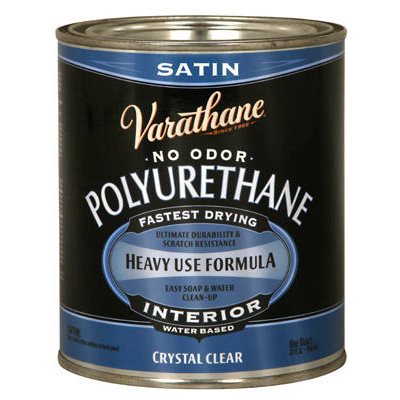
You’ve painted a piece of furniture with your chalk-based paint and now you want a durable, smooth finish….which polyurethane do you use and how do you apply it?    When I first started painting, these were my concerns…so I started researching.  I knew I wanted to use a water-based polyurethane.  This is the one I found to be the best:  Varathane Heavy Use Formula.

varathanepolyWhy this brand?  There are several reasons:

  1. No odor
  2. Easy Cleanup
  3. Fast Drying – although sometimes a little too fast so you have to work small areas at a time
  4. Satin finish
  5. And this is the most important – Crystal Clear – it does not turn yellow on light paint


As I started painting and sealing more and more furniture I started noticing that I was having difficulties in getting a smooth finish….not all the time, but more often when sealing over dark colors and after painting very old furniture.  It was very frustrating.

So, back to the Internet for more research.  I found others having the same problem.  I searched and searched and finally drew some conclusions from all the research.  Here’s what I found:

  1. Water-based paint raises the grain of the wood, creating an uneven surface
  2. The poly doesn’t go on smoothly when the surface is uneven
  3. Very old furniture is sometimes very dry and really soaks up the paint, creating an even more uneven surface.  This is especially noticeable with dark colors.

I found there was a solution to that problem.  It is called “sanding sealer”.  Who knew?  I had never heard of that before.  I do use shellac sometimes, especially on older furniture to seal in musty or smoke odors, on red woods such as mahogany, oak pieces to seal in the tannins, and wood with knot holes when I don’t want them showing through.  I still use shellac for that purpose even though it is not water-based, as it dries in about 15 minutes.  It even comes in a spray can.  I use it to spray the inside of the pieces.
varathanesandingsealer

Varathane has a sanding sealer also.  Yay!   It cannot be found in my hometown, however.  I love the Varathane products. It can be ordered online from variious places.  But, when unavailable, I also use Minwax water-based sanding sealer and have had good results.

So what does sanding sealer do?  It basically fills in the spaces around the raised grain and creates a smooth surface.  It also works as a sealer on odors like the shellac.

It is important to note that I use sanding sealer when painting with dark colors.  I don’t seem to have streaking issues with lighter colors, so I don’t use it on the lighter colors, unless it is very old dried out wood.  It is my belief that with the darker colors, the light picks up the wood not being even, creating the streaky look.

A word of caution when using sanding sealer.  Please use a thin coat and make sure you sand it afterwards.  If you put it on too thickly, it will turn yellow and you don’t want that.  So….thin coats and sand afterwards.  Always!  Use a very, very fine sandpaper.  320-400 would be good.

I now use sanding sealer on all my older pieces before I paint. I also always use it now after painting dark colors especially just because I want the smoothest possible surface before using the polyurethane.

How do I apply the sanding sealer?

  1. With a good synthetic brush (Purdy is a good brand) apply a thin coat of sanding sealer to your piece of furniture.
  2. I let this dry about an hour and then with a very fine 320-400 grit sandpaper, I lightly sand (with the grain). You will see it creates a powdery dust.  That is what you want to see.
  3. Do I apply sanding sealer once or twice?  That depends….sometimes I work with very, very old wood that no longer has a good finish.  Then I would apply the sanding sealer more than once.  If still in good shape with a good finish, I apply and sand only once.
  4. After sanding, I wipe all the dust away with a wet paper towel and then wipe down with a dry paper towel.

The finish on my older, dried out piece is now very smooth.  If it doesn’t feel very smooth, then I would apply the second coat and sand again.

Now my paint goes on smoothly and doesn’t soak in, so I’m saving paint here, too.

In the past, after I’ve painted my piece of furniture and allowed it to dry, I would start applying the polyurethane.  Sometimes, it would go on perfectly and sometimes I would become frustrated because no matter what I did, it would start “gunking” up or leave a very uneven finish.  I would apply it very thinly, going only in one direction and not go back and forth and only work in small sections, but still would not be happy with the results.  This wouldn’t happen all the time, though, so that’s why I couldn’t figure out what I was doing wrong until I did my research.

The next application of the sanding sealer is where the magic comes in.  I now use the sanding sealer with ALL my pieces of furniture I have painted with dark colors after applyng the paint, even it I don’t use it before.

Steps for applying sanding sealer after using chalk-based paint:

  1.  Apply the final coat of chalk-based paint and allow to dry.
  2. With a good synthetic brush (Purdy is a good brand) apply a thin coat of sanding sealer to your painted piece of furniture.
  3. I let this dry about an hour and then with a very fine 320 grit sandpaper, I lightly sand (with the grain). You will see it creates a powdery dust.  That is what you want to see.
  4. Do I apply sanding sealer once or twice?  On painted pieces, I usually just do the one coat.
  5. After sanding, I wipe all the dust away with a wet paper towel and then wipe down with a dry paper towel.  If it feels nice and smooth you are ready for the poly.  If not, you may want to do another application of sanding sealer and sanding.

Why all these extra steps using the sanding sealer when it takes so much longer than just painting a piece and putting a sealer on it.  Because I want a quality piece of furniture when I’m finished.  I hand paint my furniture and I want it to look the best it can.  If that takes a little more time and care and less frustration, then I don’t mind it.  That is a much better solution that sanding down a “gunky” mess and starting over.

The first time I applied the poly (I use Varathane water-based polyurethane crystal clear satin finish)  to a piece after using the sanding sealer, I was ecstatic!  The poly literally glided off my brush (and again….I used a quality synthetic brush to apply the poly).  I didn’t have to worry about it going on too thick.  It went on thinly all by itself, just like magic.  I was able to go back and forth a little and then when I was satisfied with that, I ended the small sections I worked with going in one direction.  I lightly sand in between coats of poly with a very very fine sandpaper.

I usually use 3-5 coats of poly on the top of my pieces for durability and two coats on the rest of the piece.

You will be amazed at the difference the sanding sealer makes.  I now recommend using  the water-based sanding sealer and polyurethane when sealing furniture painted with our Missouri Limestone Company’s chalk-based paint.  It is well worth the extra time.

Here’s my piece I painted with Missouri Limestone Paint Company’s “Gray Goose”.  You can see the reflection of the mirror on this piece, but no streaking!  The finish is also as smooth as silk!
dresserfinished


TIP OF THE WEEK: April 15, 2016 – October 7, 2016

See our TIP OF THE WEEK page for newer tips.

The TIP OF THE WEEK came about through a facebook site my friend and I started, but I wanted to have them all in one spot.  I’m re-posting the ones I’ve written before here on my blog, then will post new weekly ones in separate posts.  I hope some of these help you as you paint with chalk-based paint.  Follow my blog to get notified when I post new Tips of the Week.


TIP OF THE WEEK:  October 7, 2016 (posted by Michelle)  😊 custom pieces are a unique way to transform traditional pieces into One of A Kind furniture. you can free hand or simply stencil a piece and completely change the style. I love seeing new ideas in furniture. These pieces were inspired by my friend, Leigh Ann. Thank you for the inspiration, to recreate a “New Look”

Posted Pics Before & After   Note:  Facebook photos
Pic 1: inspired by photo
Pic 2 – 4 Redefined pieces

Michelle Sohn Conrad's photo.

TIP OF THE WEEK:  September 28, 2016 – Stripping furniture – I have recently, with my new-found love of the restoration hardware look, realized that there were some pieces of furniture I want to strip down to the raw wood even though with chalk-based paint that is not necessary. I remember, though, the old gel stripper I used to use. It was messy, nasty smelling, and if you got some on your skin, you could actually feel it burn. I didn’t want to relive those days. However, I did want to get down to the raw wood so the paint could get into the grain even more for that barn wood/driftwood effect. I did some research and found Citristrip. It is non-toxic, has a citris smell, and is water clean-up. It is available at Lowe’s for $11.98. I found it extremely easy to apply because Danny did it, not me. LOL Note: The table I wanted to strip was an old oak table with just a light coat of varnish. I’m sure if you had many layers of paint or heavy, dark varnish, it would take much longer and probably more applications. For this table, Danny brushed on a coat and let it set up for about 30 minutes. You could see it bubbling up. Then he scraped it off with a paint scraper. He cleaned it up with a wet paper towel and let it dry and it was ready for me to do the barn wood/driftwood technique on it. I won’t always be stripping furniture down to the raw wood, but when I do…I’ll have Danny use Citristrip again. : ) 

Update:  A new tip of the week – using Saran Wrap with Citristrip!  Check it out!

Sharon Strothcamp Sumner's photo.

TIP OF THE WEEK:  Old barn wood is all the rage right now. You can use this technique with our Missouri Limestone Paint Company chalk-based paint and a water-based stain and sealer to create this look of old barn wood. Here’s the tutorial: http://cececaldwells.com/barnwood/

Update: I couldn’t wait to try this so this morning bright and early, I got started. Of course, I didn’t take a before pic of my piece of wood, but it was a new piece of oak, I believe….light in col…

Continue Reading

This week’s guest blogger is our Retailer, Erin Gunckle Debri from Grand Ledge, Michigan. Many of you may recognize her as Lucky Star Lane. However, she…
CECECALDWELLS.COM

TIP OF THE WEEK:  Designer Knobs!  I can’t wait to try this! This tip even includes all these designs! And it mentions If you use Martha Stewart modpodge, you could even wash in the dishwasher after 28 days. It’s that durable.

Anthropologie worthy DIY cabinet or door knobs that look like hand painted designer ceramic knobs! Download beautiful designs to make your own set easily!
PIN.IT

TIP OF THE WEEK:  The Garden Rocker – It’s a seat normally used in the garden but has been “redefined” to use with painting furniture. “This ergonomically designed seat subtly rocks with you as you bend and stretch. The patented curved base reduces strain on knees & lower back while providing a full range of motion.”

I read about this seat on a blog called “Refunk my Junk” and knew I needed to find this as soon as possible. My knees and back really take a beating when I paint. The blog mentions you can find them at Tuesday morning. I didn’t have any luck in Cape Girardeau but I did find one at Lowe’s for $24.99. Can’t wait to try it out!

Here’s the blog link for the seat:http://refunkmyjunk.com/your-bottom-will-thank-me-4/

And here’s the link on how this blogger paints furniture:http://refunkmyjunk.com/painting-furniture-tips-tricks-turn/

Image may contain: 1 person , outdoor

TIP OF THE WEEK:  Save space and leave drawers in while painting – I love the space saving while painting idea behind this tip. I never thought about this. I will definitely be trying this on the next drawer project!http://pin.it/uxply5Y

TIP OF THE WEEK:  Restoring Hardware – While searching for something else last night, naturally I found yet another thing. This little jewel will make you jump for joy when it comes to working with the hardware on a piece of furniture. It is a product called “Rub n Buff”. Sometimes you just want to keep the cool hardware but it just doesn’t go with the piece anymore or it is discolored and unsightly. Never fear…..you can restore it, too! You don’t have to buy expensive new hardware. I can’t wait to try Rub n Buff!

1. You can paint and distress it with your Missouri Limestone chalk-based paint. : )

2. You can spray paint it…..I have found Amy Howard at Home’s white spray lacquer to work very well – makes it look like a piece of porcelain. Also, I’ve tried a metallic silver spray paint.

3. But last night I ran across a video of someone using Rub n Buff. This looks like a great way to finish hardware. I can’t wait to try this. I found you can purchase Rub n Buff online at Walmart and Amazon. But, I think places like Michael’s or Hobby Lobby may have it in their stores. You would have to check that out. It comes in a variety of colors.

Here’s a link to the video I saw last night and a link to a question and answer on Rub n Buff.

Video: https://www.youtube.com/watch?v=YEuU_hZNMqE

Q & A: http://renewredo.blogspot.com/2012/10/rub-n-buff-q-a.html

TIP OF THE WEEK:  Video Tutorial – dry brush distressing technique over original finish. Enjoy!  Note:  This is a facebook video.


TIP OF THE WEEK:  I came across this site of a report about trending paint colors. It is interesting to note how many colors for 2016 trends are found in Missouri Limestone Paint Company’s Chalk-based paint. They work hard at staying on top of what colors are in fashion.

We’re taking a close look at the 2016 paint color trends and forecast reports highlighting paint colors are predicted to be popular in 2016.
WWW.THECREATIVITYEXCHANGE.COM|BY THE CREATIVITY EXCHANGE

TIP OF THE WEEK:  Adding a graphic image….I’ve tried many different ways of adding an image to a piece of furniture, wood, or fabric – some with success, some were complete failures. When I came across this technique, I thought I might be able to do this. I haven’t tried it yet myself, but it does look doable. I think at the very least it would give you a good enough image to enhance with paint (for the artists out there) or to touch up with a paint pen or Sharpie. I think I might be able to do that. So, if anyone tries it before me, be sure to let me know how it worked, and post your result pics here! Enjoy!

I want to show you How To Add A Graphic To Furniture The EASY Way. I decided to start with a little cupboard that was a gift. [media_id:3489893] When I first…
HOMETALK.COM

TIP OF THE WEEK:  Great ideas for Upcycled Furniture.

Over 20 of the BEST Upcycled Furniture Ideas – ways to turn Trash into Treasure! These ideas are a great way to repurpose old furniture & very easy to make!
KITCHENFUNWITHMY3SONS.COM|BY KITCHENFUN3SONS@GMAIL.COM

TIP OF THE WEEK:  Vaseline  distressing …. I love to try out news ways to distress and dshare what I learn. The last two pieces I’ve done, I wanted to get a chippy, shabby chic look so I thought I’d try vaseline as the distressing agent. I want to say this works perfectly and is very, very easy. I was lucky, too, that the two pieces I wanted to distress were already dark wood, so I only needed one color of chalk-based paint. Normally, you’d want two colors, one a base coat, then the vaseline where you want it to go and then the top coat. I found this tutorial very helpful when distressing with vaseline. I used my finger on my first piece and a cotton swab on the second. I think a small artist paintbrush is what I’d use the next time to help give me control of the vaseline.

Before I reveal a few tips I learned and show you how EASY it is to distress with this Vaseline technique, here’s the before and after and a few close ups. CHARMING!
SALVAGEDINSPIRATIONS.COM|BY DENISE

TIP OF THE WEEK:  Baby wipes for distressing chalk-based paint….who knew? Of course, my chalk-based paint of choice is Missouri Limestone Paint, available at Gift Emporium & Cafe’ in Sullivan. : ) Watch for sales, use coupons, buy in bulk…..Dollar Tree also carries a 90-count package.

I happened upon a new brand of Chalk Paint recently (not to be confused with chalkboard paint). Have you heard of CeCe Caldwell? Great all natural chalk paint…
TWENTYONEFIFTYNINEBLOG.COM

TIP OF THE WEEK:  Did you know you can paint those cheap white canvas shoes? They turn out great and are very quick to do. My grand daughter Lucy demonstrates how in this video. I also painted a pair for her brother Liam. I painted in the morning and he wore them by afternoon. Tip: Make sure the canvas shoes are plenty big. By the time we sprayed them with water and painted them, I think they might have shrunk a little, so get them plenty big enough.

Lucy demonstrates painting canvas shoes: https://drive.google.com/file/d/0B4jO-IG4PCRmcXd1ZUNJUEhNVm8/view?usp=sharing

Liam’s shoes:liamshoes

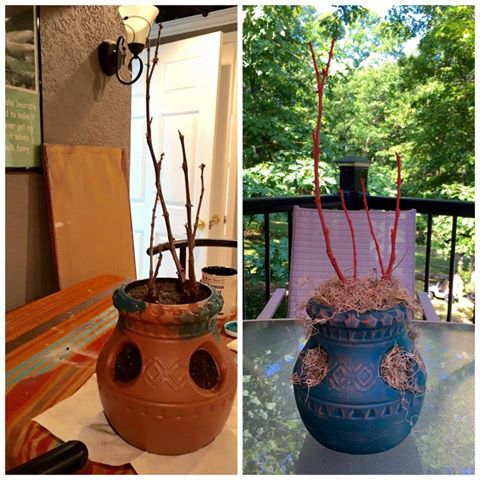
TIP OF THE WEEK: The Ultimate Redefined Tip: Taking Redefined to the next level….redefining a dead plant. I thought I’d share the painted pot/stick idea inspired by the botanical garden ones we saw in Germany. I just happened to have a plastic hen and chick pot (yes, you can paint plastic) left over from last year, complete with dirt and dead plant sticks already in place. How handy is that? I left the dirt to give it some weight. I painted the pot with one coat of Missouri Limestone Paint’s “Bourbon Street” then used the dry brush technique with a little bit of “Coral” on the pot and the sticks.
paintedstick

TIP OF THE WEEK:  (Posted by Michelle)  Bleach is not my friend, but Sharsumpaint is.
Well today started out with loads of laundry on my agenda. Several loads of white with Bleach. All went well until…I did a load of colors. Black, blue and grey. Simply loaded the washer, then.. added Bleach. To late…!! They were all a new style of polka dotted white & dark.
Okay this got me thinking. First: I’am a idiot for doing this. 2nd tye dye clothing would be a little too much 70’s for all my pants. 3rd what can I do to fix this? Then…like a light above the head (I do see the light on this one) I remembered Sharon Strothcamp Sumner paints. I has re- painted a cushion, so maybe I could salvage some of my clothes. ( Not wanting to buy a new wardrobe do to being, Bleach happy) it worked! My tip is, if you splatter bleach or as I, Added it to all your clothes in the wash. Paint them. The result was fantastic. Simply spray the area you are painting then water down paint slightly, let dry completely and it is a set in color.
I won’t share the picture of the clothing catastrophe. I will share the cushion. Before was a Ivory worn cover into a Coal Shovel (black) Sharsumpaint creation.

paintedchaircushion

paintedchaircushion1

TIP OF THE WEEK:  Canary Street Crafts Blog is one of my favorite reads. This post is spot on explaining when to prep when painting with chalk-based paints. Enjoy and be sure to check out other areas of this site!

Learn how and when to prep furniture before painting with chalk paint.
CANARYSTREETCRAFTS.COM

TIP OF THE WEEK:  Stenciling with Chalk-based Paint

I love my Silhouette machine for making stencils to use on the furniture I paint with Missouri Limestone Chalk-based paint. I can create just about any kind of stencil you can imagine…well within reason….as long as it is a pretty simple design. I will also sometimes, buy the design on Etsy, usually for a very reasonable price and cut it out on my machine. Another great source for plastic type stencils can be found at Gift Emporium & Cafe’ hanging on the door of the cabinet where our paint is on display. How handy is that!

It is very easy to stencil a design on your project using chalk-based paint. Why? It is easy to work with and dries so fast! If you have never stenciled before, you’ll need just a few basic supplies….a stencil, a stencil brush (just a cheapy from walmart is fine) your project, and…..of course….some Missouri Limestone Chalk-based paint. : )

You can use a foam brush or one with bristles but they should be the flat across type. I use contact paper when creating my Silhouette stencils. Contact paper of today is not that sticky stuff from the past. Sometimes it is called adhesive shelf liner. It doesn’t matter the color or print. I can sometimes find it at Dollar Tree and keep it handy for making stencils.

1. Whichever type of stencil you use, attach it to your project….if a plastic one from Gift Emporium, use painters’ tape to hold it in place. It is important that your project has had time to cure, about 24 hours is best, to ensure the tape won’t pull up the paint.

2. Dip your stencil brush in the paint, and then dob it on paper towel. This makes sure you don’t have a lot of paint on your brush. Start on the edges and work your way toward the center, dobbing up and down, quickly. When you feel you have covered all you want inside the stencil, allow the paint to thoroughly dry before removing the stencil. This usually only takes about 5-10 minutes, depending on the thickness of the paint you applied. I sometimes hurry that process by using a hair dryer.

Note: If you are using a plastic stencil over and over, be sure to wash it often so you don’t get a build up of paint that would allow new paint to seep under since it might not be laying flat anymore.

3. Carefully remove the stencil and…..your beautiful design will be revealed. I then use whatever topcoat I had planned for the piece, either wax or a poly seal.

I’ve included several examples of projects I’ve completed, using a stencil.

So, if you want to start doing some stenciling on your projects, head over to Gift Emporium to see what she has in stock, or PM me about creating a stencil for you on my Silhouette machine. Prices would vary, but not be expensive at all – you’d basically be paying for my time to make it….after all, the material is just Dollar Tree contact paper. : )

parisstencilfairestofthemallstencilgrandehotelstencil

TIP OF THE WEEK:  SharSum Paint’s Missouri LImestone Company’s chalk-based paint, carried by Gift Emporium in Sullivan, uses plastic lids on their jars of paint. Just sayin’….: )

5 Ways to open a plastic stuck on jar lid:

Have you ever struggled trying to open a plastic paint container? If any product lands on the containers rim, the paint ends up drying and fusing the lid shut. The next…
SALVAGEDINSPIRATIONS.COM|BY DENISE

TIP OF THE WEEK:  (Posted by Michelle)
I want to begin by saying. Do not feel challenged by painting and re creating your own finds. I was totally intimidated by all this chalk paint chatter. The paint looked so beautiful on furniture, it had to be difficult, I thought. This is the wrong mind set. After Sharon literally placed the first sample purchase in my hand and directed me to go home and try it. I loved it. I believe my first thoughts were, this is so easy a monkey could do this. Not to down play monkeys. I do love them.


The one thing I am trying to express is that you simply put one thin coat on let it dry, fifteen to thirty minutes, then re apply a second coat. Mission complete with a brand new style to a older worn out treasure. Anyone who can use a paint brush can easily do this. My tip is go create with this one of a kind limestone Sharsumpaint. Beautiful results with a rewarding feeling of self gratification that all is well in the world of creation. Thank you Sharon for the insisted introduction to your paints. I love them, and the future of furniture looks bright.

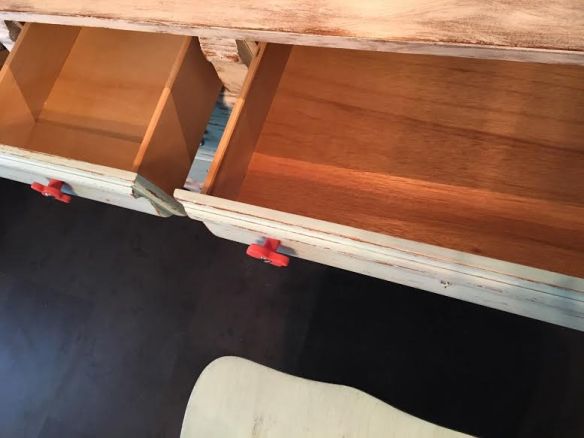
TIP OF THE WEEK:   I’m finishing up the “Ombre Desk” set. The desk is finished and I’m working on the chair. Won’t be long now. The desk is in really good shape and the drawers are in great shape, too. They smell just fine. However, I’m into essential oils and I have an oil from Young Living called Cedarwood. I decided I would wipe down the drawers with a mixture of water and about 10 drops of Cedarwood. I thought that might be a perfect scent for a wooden drawer, right? It smelled so good, I put a little oil on qtips and put one in each drawer for awhile. I love opening the drawers and getting a faint whiff of Cedarwood. You might try a favorite scent in the drawers of something you are working on or purchased.

ombredeskdrawerwithcedarwood

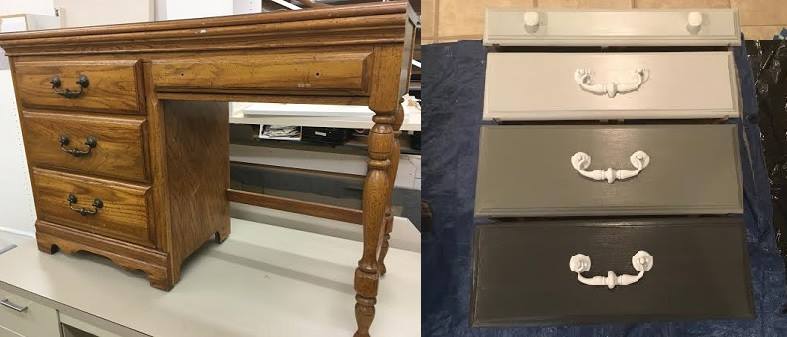
TIP OF THE WEEK: I’ve been working on a desk today that will be for sale soon. I am so pumped on how the drawers are looking, I just had to share. They are finished with 3 coats of poly and they are gorgeous. I’m calling this desk “Gray Ombre” as the drawers are varying shades of gray using Missouri Limestone chalk-based paint. Take a look at the drawer pulls in the original photo and then again in the finished drawer photo.

I love, love, love the Missouri Limestone Chalk-based paint we have for sale at Gift Emporium and Cafe’ in Sullivan, but I also love to use other products when I find something I like. In this case, it is Amy Howard’s Home spray lacquer “White Perfection”. You can buy it at Ace Hardware Stores. It is expensive but it makes old hardware look like porcelain. The knobs on the drawers are porcelain, but metal knobs can be painted, too. Now that you have this awesome tip, just be sure to use our Missouri Limestone chalk-based paint and move on past Amy Howard’s. : )   Gift Emporium and Cafe’s facebook page: https://www.facebook.com/Gift-Emporium-CAFE-194319340843
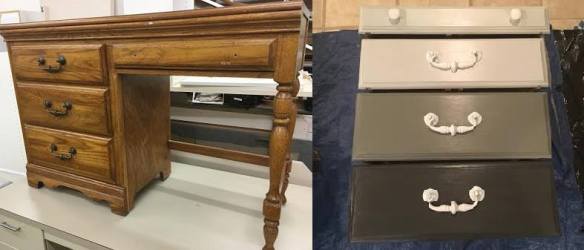
drawerpulls

Restoration Hardware Look? Yes, Please! A Driftwood/Old Barn Wood Technique for Wood

My husband and I (SharSum Paint) are distributors of a brand of chalk-based paint out of Ozark, Missouri, called Missouri Limestone Paint Company.  Even better, we personally use the paint we sell and, through our business, teach classes to others on how to use it.  As a result, I’m always on the lookout for different techniques to try out and share with others.

Yesterday, I was on Pinterest, naturally.  I came across a tutorial on creating a driftwood/barn wood effect.  What was really interesting was how the author referenced the final result being reminiscent of “Restoration Hardware” furniture.  I had to learn more!

Old barn wood is all the rage right now. Here’s the excellent tutorial showing the method they used and was what gave me the inspiration to try my own version: http://cececaldwells.com/barnwood/

Of course, I took a little liberty with the tutorial and substituted our paint brand ( we all have our favorite brands, right?) and changed it from using a stain/sealer to using liming wax mainly because I wanted to try out liming wax. varathanewaterbasedstainsealer If I were going to do this on something like a kitchen table, I might use the method in the tutorial, or possible do the wash, then the drybrush, making sure to blend it in, then seal it with stain/sealer as the final step. I will try to get a sample using stain/sealer later.

I couldn’t wait to try this so this morning bright and early, I got started. Of course, I didn’t take a before pic of my piece of wood, but it was a new piece of pine, I believe….light in color. Anyway, it had some good grain in it. I also looked at the tutorial again and noticed there were quite a few steps listed to get the result of driftwood/barn wood…..the restoration hardware look. 1. gray paint wash 2. stain/sealer 3. dry brush white and 4. seal again. I decided I could create that look in 2 steps…(The older generation reading this might find this statement reminiscent of “I can name that tune in 2 notes”!)  : )

I remembered that liming wax will give the whitewash effect the dry brushing does. I also wanted to use wax rather than a sealer.  What is liming wax? It is basically a white wax – a clear wax with an added white pigment that gives a white grained finish, a white washed faded effect to your bare or stained wood or painted furniture. Liming works best on either open grained wood such as oak, pine or ash but is also beautiful on ornately carved furniture where the white wax will settle in the crevices and give a soft worn look (like antiquing with dark wax but cleaner and more gentle). Originally, lime was used for this technique, which is pretty caustic. Using a white wax will give you a similar look but it is safe to use  and at the same time will also protect your furniture and make it smooth to touch. What is even better is you don’t have to buy liming wax. You can make your own. I used the Briwax toulene-free clear wax we carry at a local store in Sullivan, Missouri as well as at our other locations in Bourbon, Cuba, and Rolla. I added a little Missouri Limestone Paint Company “January’, just eye-balling the amount…..I would say maybe 3 parts wax to 1 part January to start, and then stirred it up. It looked nice and white after stirring. Briwax is so easy to apply and buff. Not much elbow grease is needed at all. It does have a chemical smell, however, so I would make sure to work in a well ventilated area.

Here are the steps I used.  The finished result is below although the picture doesn’t show how truly beautiful the board is after this technique.

1. I poured a small amount of Missouri Limestone paint Company “Gray Goose”
into a small cup. I had another small cup of water. I dipped the brush into the Gray Goose paint, then dipped it in the water. I applied this thinned down paint to the whole board, adding more paint and dipped water as needed to cover. I let that sit for a few minutes, then wiped it off lightly with a wet cloth (I use baby wipes – they work great). I let that dry and then reapplied. The two coats is what darkened the wood more and then I didn’t need a stain.  I also didn’t need a poly sealer as I wanted to use wax to seal.

2. Then came the liming wax I made (see above). I did apply it with a round brush, really working it into the grain of the wood. I let it sit about 30 minutes or so and then buffed it out. I did two applications of this as well.

That’s it! Only two steps!   On a piece of furniture, I would go ahead and do one or two more coats of clear Briwax  for more durability.  Watch this site soon for a “Restoration Hardware” type piece of furniture I will be painting using this technique.

Here’s a photo of my finished board.  The photo, though, does reflect how truly beautiful this technique is.

driftwoodtechnique

Here are some picture frames.  They were raw oak.

But wait!  There’s more!  Here is my first finished piece – The Restoration Hardware Look – already sold!  I am 100% in love with this look.

Stay tuned for a post on my version of this technique using a stain/sealer.

August 27, 2016 Make & Take It Class

Spirals Art Gallery & Studio:  Cuba, MO – next class is scheduled for September 17, 2016.  Click on the Spirals link to learn more!

Our 1st of many DIY chalk painting classes was a success! Sharon and Danny Sumner of SharSum Paint gave a great classroom lecture and then we all turned to the studio for hands on painting. The group painted everything from kitchen cabinet doors, a desk, and cubby, to tv stand, floor lamps and shades!

14203323_1059686724127147_3726024188578198379_n 14203388_1059686694127150_7854451157466435708_n 14203365_1059687490793737_4968984761187267623_n 14117874_1059687540793732_2491467400317510999_n 14100313_1059687277460425_819917799049567500_n

Upcoming Class – September 17, 2016

Click on image to enlarge

Click on image to enlarge

Shabby Chic Desk/Hutch Set

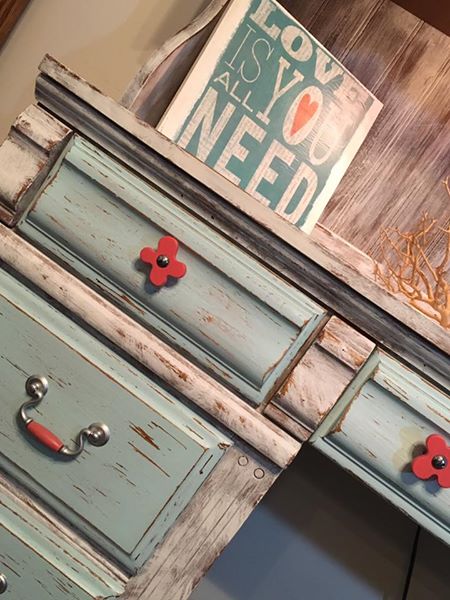
My Shabby Chic Desk/Hutch has been one of my favorite projects so far using our Missouri Limestone Company’s Chalk-based paint.  I personally paint furniture to sell with this paint we distribute through our SharSum Paint company and really fall in love with some of the things I paint.

You can read through the transformation below, or if you are in a hurry and want to come back to this wonderful piece of writing later, just scroll to the bottom to see this Shabby Chic Desk/Hutch Set in all its glory!

I really, really would love to keep this one but just don’t have the room in my house.  As of now, it is for sale.  Like it?  Pay my too low asking price of $215 and the shipping charges (which would probably be astronomical) and it’s yours!  : )  I’ve often wondered how individuals on sites like ebay and etsy ship huge pieces of furniture.  I can just see me wrapping this up in brown paper and taking it to our local hardware store for UPS pickup.

Seriously, I do have it for sale on Facebook’s Marketplace.  If you are looking for projects to paint or have something to sell, this is a great place to do it.  Marketplace somehow finds all the swap sites on Facebook (according to your desired location setting) and puts them in one place .  You don’t even have to a member of those sites.  I have bought and sold several things through Marketplace.  I love this service!  P.S.  I just noticed this set has been viewed by 509 people in the last two days.  Wow!

But first, the history of the desk/hutch.  I found this set on one of the swap sites.  It sat smack dab in my living room for months!  As you can see a floor lamp is on the desk at this point.  I would look at that huge hutch and think, “How am I ever going to paint those little letter cubby areas” and then get overwhelmed with how huge a project like this would be.

I couldn’t think what I wanted to do with it, so I finally sold it to my friend, Michelle, who carries our paint in her store and paints projects right along with me.  We call ourselves Lucy and Ethel.  Funny thing, that’s not the first time a friend and I have had those nicknames and I always seem to be Lucy.  Hmmmm.

But then…..a previous customer who had bought a desk from me earlier for one of her daughters contacted me and wanted me to find and paint another for another daughter.  Sure!  No problem.  I knew just the desk. It even looked somewhat like the one she bought earlier. She probably wouldn’t want the hutch, but I sent a quick text to Michelle to see if she still had it in her stash and back it came. Only catch was, I had to take the hutch back, too!  I sometimes feel we spend more time shuffling furniture around than actually painting.  🙂  So then it was back in the living room again.

Now, to find inspiration for the desk.  I started searching and came upon this awesome blog.  Would you believe this lady had the same exact desk I had?  Not only was it painted with an absolutely beautiful shabby chic look, she even had a tutorial on how she did it!! Her blog is called “How to Nest for Less” and her desk tutorial can be found here.  Thank you, thank you, Erin!

Erin’s painting idea was genius!  Dry brush distress right over the desk as it is.  I painted the desk first and realized that it just had to have the hutch.  However, both pieces would be way too big for this little girl’s room.  I happened to have just finished another smaller desk/hutch in a blush pink and suggested this one instead to the customer.  She loved it for her daughter!  SOLD!  I’m going to paint a chair to match and….she is also buying a dresser to match the desk set she bought earlier.  It was a good week for furniture selling.

Back to the Shabby/Chic desk set.  I now had the desk completed, with new knobs (actually clear resin knobs I found at a yard sale and painted “Vintage Coral” and pulls spray painted silver with the wood part painted “Vintage Coral”.

finisheddesk

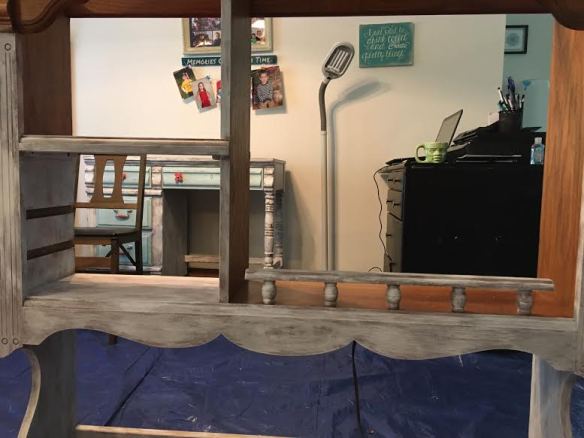
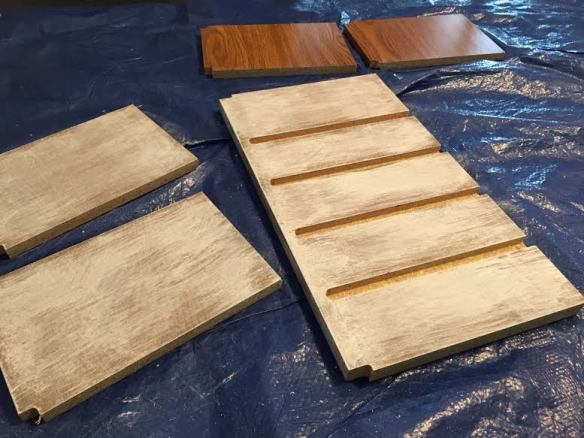
I was ready to tackle the hutch. As I was painting it, I decided to take the cork board off and paint it.  I had researched and found it was best to shellac it before painting, so Danny (my husband and partner in all of this) used our handy dandy Zinsser Bulls-Eye Shellac on it. That worked like a charm and the paint just glided on.  Then I figured it would be easier to paint the back if it was off.  When it came off, we discovered the shelves and letter cubby things all slid out and I was able to paint each piece separately!!!  Yahoo!  And I’d been so stuck on what trouble that was going to be.

corkboard

Corkboard – shellac first

openhutch

hutch without back

paintedcubbies

letter cubbies came apart

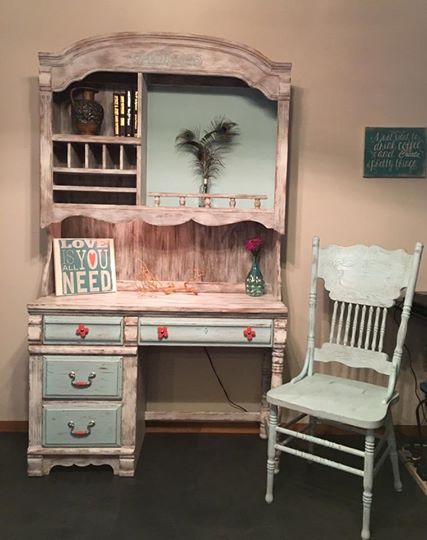
I finished up the hutch and if the desk looked pretty before, once we put the hutch on top the transformation was amazing.  This set is officially GORGEOUS! I added a shabby/chic chair to match and it was ready to sell!  Oh and did I mention, the hutch has a light?  Right now, there are two people interested in it, so it is going to sell quickly, I think.  But maybe not too quickly.  I like looking at it as it sits in my crowded dining room and going over every once in awhile and sitting at it and running my hand across the top.

I do believe I’m a little obsessed over this project.

Are you ready for the reveal?

deskhutchfinalpicatnightdeskhutch1deskhutch3detaildrawers


May 16, 2016 Make & Take It Class

We had a great time at our May 16th class.  It was even a mini reunion with two of my fellow high school graduates attending.  It was a lot of fun, especially when I flicked paint on several unsuspecting observers. Oops. Thanks so much to all who participated! Your projects are going to look great and I can’t wait to see pics of them on display. You all picked some beautiful colors. We even had one project using the crackle distressing technique.The class was held at Gift Emporium and Cafe‘ in Sullivan. Class started with learning painting, distressing, waxing, and sealing tips, then participants talked, ate, laughed, and enjoyed seeing each other’s projects and all the colors of paint being used.

Interested in learning more about chalk-based paint and tips on applying it and the best way to seal it?  These people and others who have taken the class will tell you it really isn’t hard to do and the transformation is amazing!  To learn more about our classes, which are usually kept to 6-8 participants, visit SharSum Paint’s Painting Class page.

Update:  Our June 20, 2016 class is now full, but we are now enrolling for our July 11th  class.  See our Painting Class page link above for more details on our classes.

Projects are Endless, Using Chalk-based Paint

My chalk-based paint of choice is Missouri Limestone Company because, as you know by now if you’ve been reading my blog, I love it so much I’m now selling it locally!  So, when I see an idea using chalk-based paint, I just substitute with my MLP!

As I’ve said before, the projects are endless when using chalk-based paint! I was just checking facebook before leaving to get my plant at Lowe’s for my newly painted plant stand and saw this idea. Well, yes! Missouri Limestone chalk-based paint would be perfect on concrete pavers.http://www.countryliving.com/…/g10…/decorative-paint-ideas/…

My project for last night was to paint my wrought iron plant stand. There was no rust flaking off, so I cleaned this old thing up then gave it one coat of Missouri Limestone Paint’s “Homemade Ice Cream”. It now matches my newly painted front door. I know exactly what plant I’m going to buy for it in the morning at Lowe’s. 😍 I have plans now for my wrought iron set.

Update:  Here’s a photo of my new look for the front of my house.  The wrought iron furniture is painted and the set turned out great!

doorandfurniture

For even more projects using chalk-based paint, be sure to follow my board Chalk Paint Projects for inspiration as I’m always adding new project ideas there. https://www.pinterest.com/sharsum/chalk-paint-project-ideas/

How to Create a Chippy and Crackled Look with Chalk-Based Paint

Chip and Crackle techniques

Chip and Crackle techniques

I’ve been painting for a few years now with chalk-based paint.  I’ve tried out various techniques for changing the look with different types of distressing, but hadn’t done anything with creating the look of old chipped paint or a crackle finish……until now.

Let me say that both of these techniques are easy to do and inexpensive.  You don’t have to buy extra expensive products to make this happen!  To create both these looks you only need, chalk-based paint (in my case because I love it so much I sell it, Missouri Limestone Chalk-based paint) a candle, some painter’s tape (or duct tape but I like the effect of the painter’s tape better) some good old Elmer’s school glue (yes – Elmer’s glue – any kind works I’m told), a hair dryer, and your topcoat of choice.

The steps to creating these looks are easy-peasy, but I like visual step-by-step tutorials and videos, too, and so I will not only give you the step by step directions I used, I will provide the links to the visuals I used also.  If you don’t follow the videos of Debi’s Design Dairy you should.  She is very informative, easy to follow, and is just plain silly!

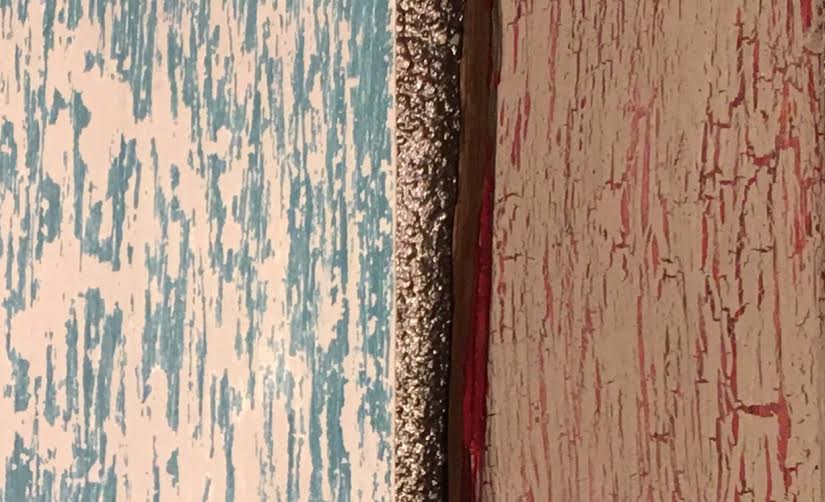
First of all, here’s a closer look at my completed practice pieces.  I will explain below how you can get this look, too.

chip and crackle paint

The sample on the left shows the chippy look and the one on the right is the crackle.

So, how did I do this?

Chippy Look:

Here’s the link for the visual step-by-step tutorial I used for those who like visual directions, followed by my step-by-step.  That’s the teacher in me…don’t reinvent the wheel and address various learning styles to reach all students.  : )

  1.  I painted my sample board with Missouri Limestone Company’s chalk-based paint using “Trading Post”.
  2. I let that dry then rubbed it all over with a candle…yep….a regular old candle.  Cover the board really well.  I brushed off any loose pieces of wax.
  3. Then I painted over it with the color “January”.  I only used one coat on this, but I think for a thicker, chippy look, two or three coats will give it more depth.  I used a hair dryer to speed up the drying time.
  4. Are you ready for the final step before adding the topcoat?  This was my favorite part.  The directions said to use duct tape, but I didn’t know where that was at the moment, so I just used the blue painter’s tape.  I tore off a piece and placed it on the board (I went in only one direction each time I did this), pressed it down and then ripped it off!  Yep, that’s how to create that chippy look.  Isn’t that too cool.  They said to use a new piece of tape each time, but you con’t have to.  Also, I do think duct tape is the better choice, as it would have more pulling power and with thicker paint, would pull off more for more chippiness (I believe that might be my made-up word).  Ripping that tape off that board was so much fun for some reason.  : )
  5. Final step – be sure to seal your project with your favorite topcoat.  In this case, I waxed it.  I love this look!

Crackle Look:

Here’s Debi’s Design Diary video I used for this look, followed by my step-by-step.

  1.  In the video, she uses another brand of chalk-based paint, but I use Missouri Limestone Company’s chalk-based paint.  Why?  Because I love it and sell it.  : )
  2.  I painted my board with the color “Radio Flyer” and let it dry.  You can use the hair dryer here to speed things up.  I did….I can’t wait when trying something new.
  3.  Then, following Debi’s directions, I put a coat of Elmer’s glue all over (I used Elmer’s school glue, but she says any type of glue will work, even the Dollar Store brands).  I got it thicker in some areas and thinner in others, and maybe didn’t even cover some of it.  Just play around with it.  I let it sit for a few minutes to make it tacky, but not dry. Debi recommends working in small sections on bigger pieces and making sure you don’t drip glue all over the rest of your project.  Have a rag handy to wipe off drips.
  4. The I painted a coat of the color “Zinc” on top, going in one direction only and not going back over.  That is very important.  If you go over it again, it will not crackle and it will smudge.
  5. Using a blow dryer on it at this point will speed up the drying process and help it crack even more.  Plus, it is fun to watch the magic happening.
  6. Final step – use your topcoat of choice.  I waxed mine and love the look!

Now, my most pressing questions – what will I paint, what colors will I use, and which effect will I try?  I have the answer to one of those….I’m going to try the crackle look on my next project.  Wish me luck!